Select below to explore Online Expos visual resources for finger joint equipment and technology. Compare types of finger joint machines. Browse interactive graphics and technical guides. Finger jointing for mass timber (CLT and GLT)
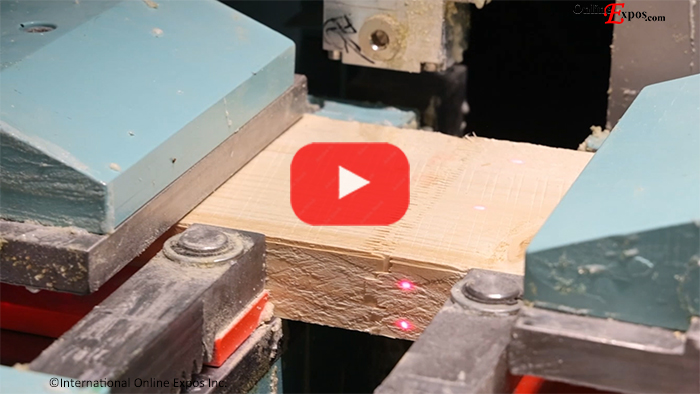
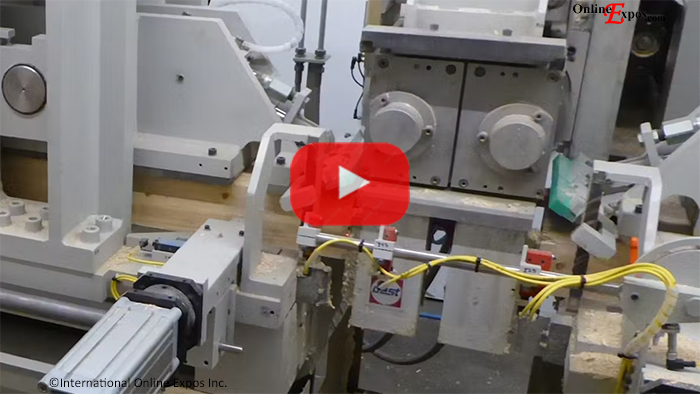
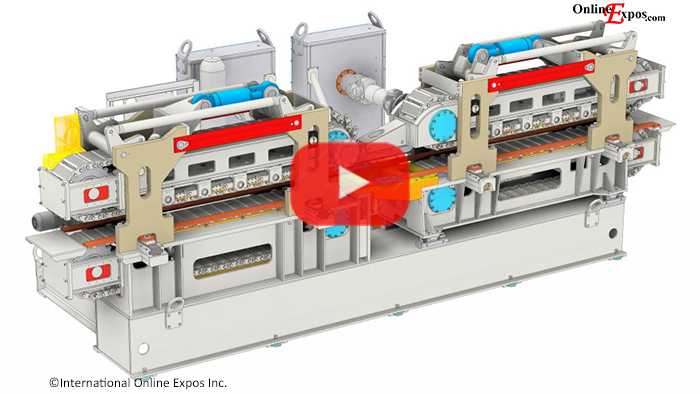
Video of Ledinek Kontizink H 5000 – Finger jointing with horizontal finger joints. See data sheet for detailed information.
Functional Description
Finger jointing is a critical manufacturing process used in the production of mass timber products such as cross laminated timber (CLT) and glue laminated timber (glulam). Finger joint machines create strong, structural end-to-end connections between shorter lumber pieces, allowing manufacturers to produce long, continuous lamellas with consistent strength, appearance, and material utilization.
Modern finger jointing systems combine precision machining, adhesive application, pressing, curing, and material handling technologies to create high-performance structural joints suitable for demanding building applications.
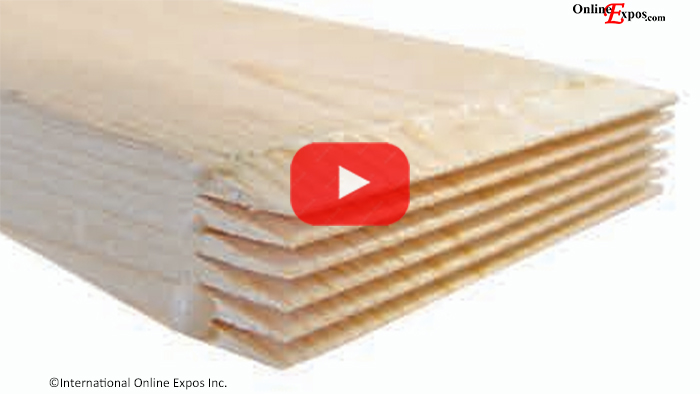
Finger joints are formed by machining a series of interlocking tapered “fingers” into the ends of lumber pieces. When adhesive is applied and the fingers are pressed together, a large bonding surface is created, resulting in a joint capable of transferring tension, compression, and bending forces.
Vertical Finger Joints:
Vertical finger joints are machined so that the fingers are oriented perpendicular to the wide face of the board. This configuration is commonly used in structural glulam and CLT lamella production because it provides excellent strength characteristics and produces a relatively smooth appearance on exposed faces.
Horizontal Finger Joints:
Horizontal finger joints are machined so that the fingers are oriented parallel to the wide face of the board. Horizontal configurations may be selected based on product design requirements, lumber dimensions, processing preferences, or appearance considerations.
Modern finger joint lines can often be configured to produce either vertical or horizontal finger profiles depending on production requirements.
Finger Joint Manufacturing Process:
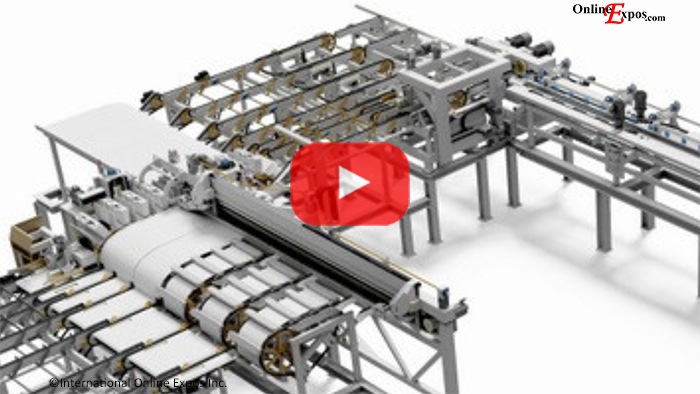
A typical finger joint line includes several integrated processing stages:
Lumber infeed and singulation
End trimming and defect removal
Finger profile machining
Adhesive application
Joint assembly and pressing
Adhesive curing
Quality control and grading
Outfeed and stacking
Automated scanning systems may be incorporated to identify defects, optimize cutting locations, and maximize lumber recovery before finger jointing.
Cold Glue Finger Joint Systems:
Cold glue finger joint systems utilize structural adhesives that cure at ambient or slightly elevated temperatures. Common adhesive systems include polyurethane (PUR), melamine-urea-formaldehyde (MUF), emulsion polymer isocyanate (EPI), and other engineered wood bonding technologies.
After adhesive application, the finger profiles are pressed together under controlled pressure until sufficient bond strength is achieved. Cure times vary depending on adhesive chemistry, temperature, moisture content, and production requirements.
Advantages of cold glue systems include:
Lower equipment complexity
Reduced energy consumption
Proven structural performance
Compatibility with a wide range of wood species
High-quality bond lines
Cold glue systems are widely used throughout the glulam and CLT industries.
Radio Frequency (RF) Finger Joint Systems:
Radio frequency (RF) finger joint systems use high-frequency electromagnetic energy to accelerate adhesive curing. RF generators create an alternating electric field within the glued joint, causing moisture and adhesive molecules to heat internally and rapidly develop bond strength.
Compared with conventional cold curing systems, RF curing can significantly reduce pressing and curing times.
Benefits of RF finger jointing include:
Faster production rates
Reduced curing bottlenecks
Shorter press lengths
Improved throughput
Consistent curing performance
RF technology is particularly attractive in high-volume mass timber facilities where maximizing production capacity is essential.
Continuous Finger Joint Pressing Systems:
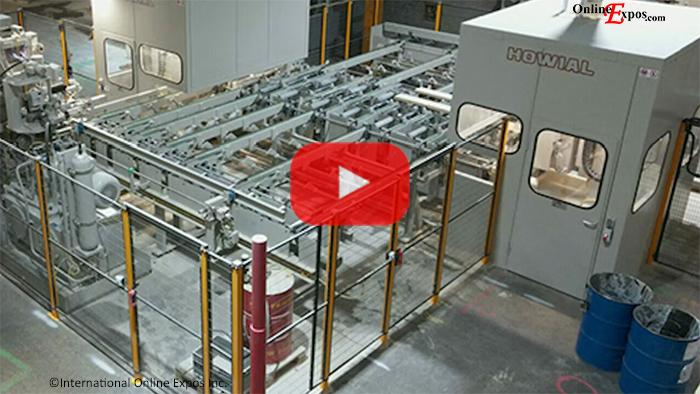
Continuous finger joint lines are designed for uninterrupted production. Lumber pieces are automatically machined, glued, assembled, and joined into a continuously advancing member.
The joined material moves through a pressing section where pressure is maintained while adhesive curing progresses. Flying saws or automated cut-off systems then cut the continuous member to specified lengths.
Advantages of continuous systems include:
High production capacity
Reduced labor requirements
Consistent product quality
Efficient integration with downstream CLT and glulam manufacturing
Continuous systems are commonly found in large-scale mass timber plants with high throughput requirements.
Stop-and-Press Finger Joint Systems:
In stop-and-press systems, individual lumber pieces are assembled and positioned in a stationary press. Once aligned, the press applies the required end pressure while the adhesive develops sufficient bond strength.
The press then releases the completed joint and the next workpiece is loaded.
Advantages include:
Lower capital investment
Flexible production scheduling
Suitable for smaller production volumes
Easier setup for multiple product dimensions
Stop-and-press systems are often selected by smaller glulam manufacturers, specialty wood product producers, and facilities with variable production requirements.
Integrated Mass Timber Production:
Modern finger joint lines are frequently integrated with lumber scanning systems, planers, grading equipment, lamella preparation lines, CLT layup systems, and glulam manufacturing cells. Automated handling equipment, robotics, and advanced control systems help maintain precise alignment, adhesive application accuracy, and production traceability.
By converting shorter lumber pieces into long, structural-grade members, finger joint equipment plays a fundamental role in maximizing raw material utilization and enabling the efficient production of engineered wood products used in today’s mass timber construction industry.
Industries Served by Online Expos/Finger Joint Machines:
The Finger Joint Machines section of Online Expos serves the finger jointing sector of mass timber manufacturing.
Types of Wood Products Equipment and Resources Available to View on Online Expos: