Home » Calculators, Tools & Technology » Saws & Knives
Select below to view calculator or information on Saws and Knives for cutting tools. Calculate machine constraints or horsepower requirements.
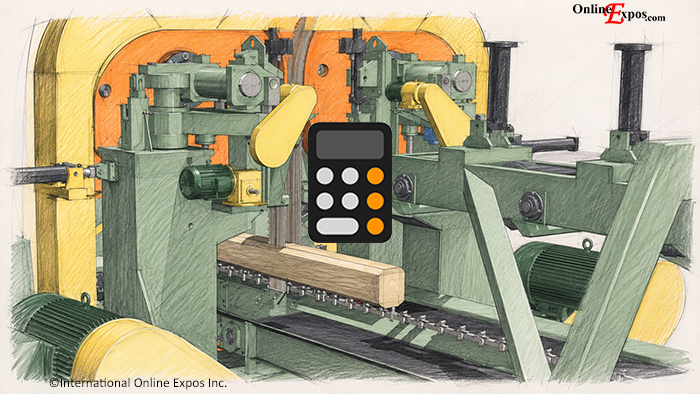
The saw calculator is used to calculate saw horsepower or feed speed constraints for bandmills. View formulas in text below.
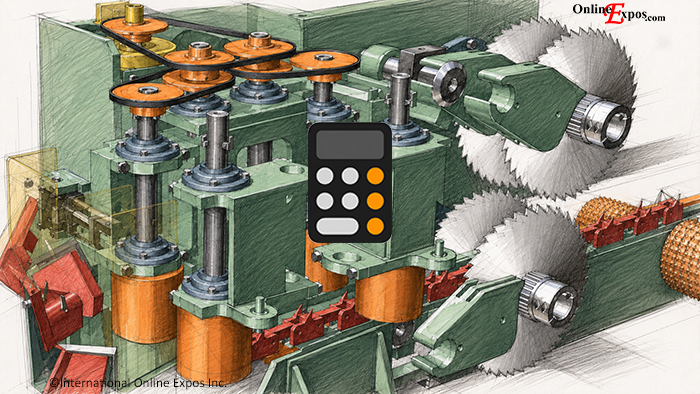
The saw calculator is used to calculate saw horsepower or feed speed constraints for circular sawboxes. View formulas in text below.
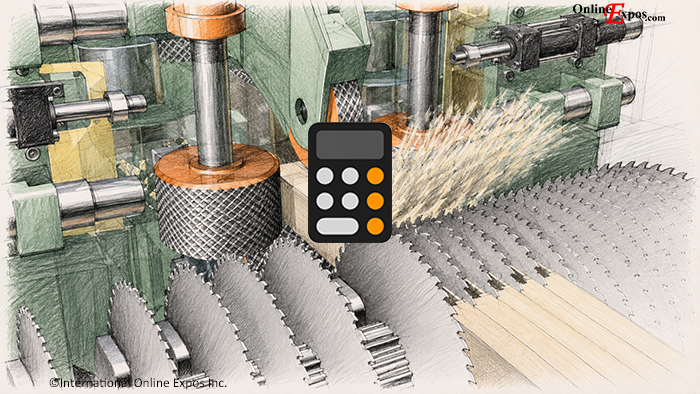
The saw calculator is used to calculate saw horsepower or feed speed constraints for gang edgers. View formulas in text below.
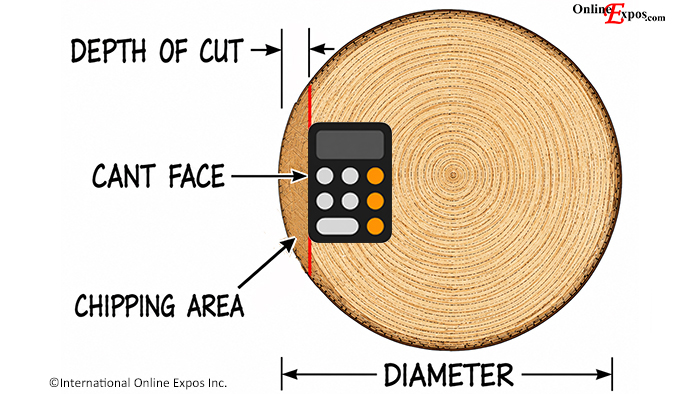
The horsepower calculator is used to calculate the horsepower required for a canter chipping head.
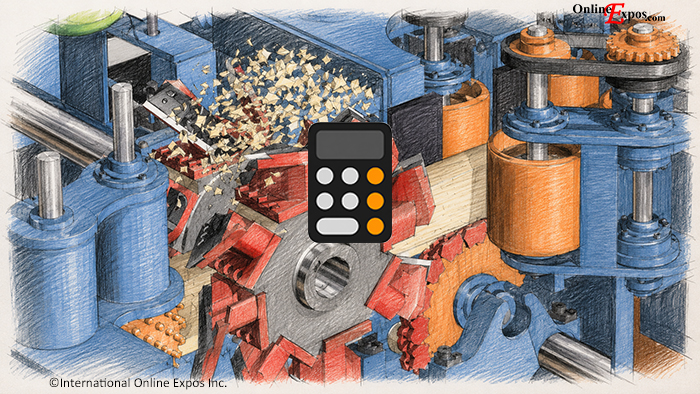
Calculate canter chipping head chip length.
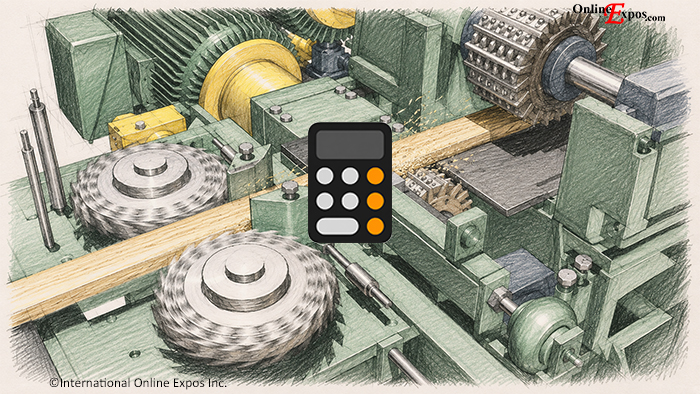
Calculate canter chipping head chip length.
This section on Online Expos contains calculators and technical information on saws and knives for sawlines and planers. Machine capacities and constraints can be calculated to determine feed speeds or horsepower required.
The saw formulas presented are based on imperial measurements:
Power:
Power (hp) required is a function of feed speed, saw design and specific gravity of the wood being sawn. Increasing any of the variables will increase the horsepower required.
Feed Speed [fpm] x Depth of Cut [inches] x Kerf [inches] x Specific Gravity x 100 ÷ 144 ÷ Arbor Drive Efficiency x 100
Specific Gravity: Douglas Fir = .45, Oak = .60, Southern Yellow Pine = .47, Spruce = .37, Oak = .60
Feed Speed:
Feed Speed (fpm) constrains is a function of horsepower, saw design and specific gravity of the wood being sawn. Increasing any of the variables will increase the feed speed constraint.
Minimum (Max Feed Speed [fpm], Horsepower ÷ Depth of Cut [inches] ÷ Kerf [inches] ÷ Specific Gravity ÷ 100 x 144 x Arbor Drive Efficiency ÷ 100, Gullet Area [sq. inches] ÷ Sawdust Expansion Factor ÷ Depth of Cut [inches] x (Surface Speed [fpm] ÷ Tooth Pitch [inches])
Specific Gravity: Douglas Fir = .45, Oak = .60, Southern Yellow Pine = .47, Spruce = .37, Oak = .60
Saw Surface Speed:
Saw surface speed (fpm) is the speed of the saw blade. This is determined by the rpm of the abor and the diameter of the wheel. The faster the saw speed the more teeth per minute in the cut.
Band Wheel Diameter × 3.1416 × Wheel RPM ÷ 12
Tooth Bite:
Tooth bite is determined by the feed speed, the rpm of the saws and the number of teeth. Increasing the feed speed will increase the tooth bite.
Feed Speed [fpm] ÷ Saw Surface Speed [fpm] × Tooth Pitch [inches]
Gullet Area:
Gullet area determines the amount of sawdust that the gullet will hold. Increasing gullet size (with the same number of teeth) will allow the saw to be fed faster.
Tooth Pitch [inches] × Gullet Depth [inches] × Gullet Area Factor
Gullet area factor = 0.42 for square back tooth 0.52 for round back tooth.
Gullet Capacity:
Gullet capacity is a function of gullet area and sawdust expansion factor. Fast growing species such as southern yellow pine take up more gullet space due to the size of the sawdust “chunk”.
Gullet Area [square inches] ÷ Sawdust Expansion Factor
Sawdust expansion factor: 1.8 to 2.0 for slow growing species (ie. northern spruce/pine), 2.5 for fast growing species (ie. southern yellow pine).
Gullet Fill %
Gullet fill % is determined by the depth of cut and the tooth bite. This calculation is used to determine available gullet fill capacity.
Depth of Cut [inches] × Tooth Bite [inches] x Sawdust Expansion Factor ÷ Gullet Area [square inches] × 100
Sawdust expansion factor: 1.8 to 2.0 for slow growing species (ie. northern spruce/pine), 2.5 for fast growing species (ie. southern yellow pine).
The saw formulas presented are based on imperial measurements:
Power
Power (hp) required is a function of feed speed, saw design and specific gravity of the wood being sawn. Increasing any of the variables will increase the horsepower required.
Sawbox:
Feed Speed [fpm] x (Depth of Cut Inside Saw [inches] + Depth of Cut Outside Saw [inches]) x Kerf [inches] x Specific Gravity x 100 ÷ 144 ÷ Arbor Drive Efficiency x 100
Gang Edger:
Feed Speed [fpm] x Depth of Cut Depth [inches] x #of Saws x Kerf [inches] x Specific Gravity x 100 ÷ 144 ÷ Arbor Drive Efficiency x 100
Specific Gravity: Douglas Fir = .45, Oak = .60, Southern Yellow Pine = .47, Spruce = .37, Oak = .60
Feed Speed
Feed Speed (fpm) constrains is a function of horsepower, saw design and specific gravity of the wood being sawn. Increasing any of the variables will increase the feed speed constraint.
Sawbox:
Minimum (Max Feed Speed [fpm], Horsepower ÷ (Depth of Cut Inside Saw [inches] + Depth of Cut Outside Saw [inches]) ÷ Kerf [inches] ÷ Specific Gravity ÷ 100 x 144 x Arbor Drive Efficiency ÷ 100, Gullet Area [sq. inches] ÷ Sawdust Expansion Factor ÷ Depth of Cut Inside Saw [inches] x (Rim Speed [fpm] ÷ Tooth Pitch [inches])
Gang Edger:
Minimum (Max Feed Speed [fpm], Horsepower ÷ Depth of Cut [inches] x # of Saws ÷ Kerf [inches] ÷ Specific Gravity ÷ 100 x 144 x Arbor Drive Efficiency ÷ 100, Gullet Area [sq. inches] ÷ Sawdust Expansion Factor ÷ Depth of Cut [inches] x (Rim Speed [fpm] ÷ Tooth Pitch [inches])
Specific Gravity: Douglas Fir = .45, Oak = .60, Southern Yellow Pine = .47, Spruce = .37, Oak = .60
Rim Speed
Saw rim speed (feet per minute) is the speed of the saw blade. This is determined by the rpm of the abor and the diameter of the saw. The faster the saw speed the more teeth per minute in the cut.
Saw Diameter [inches] x 3.1416 ÷ 12 x RPM
Tooth Pitch
Tooth pitch (inches) is the tip to tip distance between teeth.
Saw Diameter [inches] x 3.1416 ÷ # of Teeth
Tooth Bite
Tooth bite (inches) is determined by the feed speed, the rpm of the saws and the number of teeth. Increasing the feed speed will increase the tooth bite.
Feed Speed [fpm) x 12 ÷ RPM ÷ Number of Teeth
Gullet Area
Gullet area (square inches) determines the amount of sawdust that the gullet will hold. Increasing gullet size (with the same number of teeth) will allow the saw to be fed faster.
Saw Diameter [inches] x 3.1416 ÷ Number of Teeth x Gullet Depth [inches] x Gullet Area Factor
Gullet area factor = 0.42 for square back tooth 0.52 for round back tooth.
Gullet Capacity
Gullet capacity (square inches) is a function of gullet area and sawdust expansion factor. Fast growing species such as southern yellow pine take up more gullet space due to the size of the sawdust “chunk”.
Gullet Area [square inches] ÷ Sawdust Expansion FactSawdust expansion factor: 1.8 to 2.0 for slow growing species (ie. northern spruce/pine), 2.5 for fast growing species (ie. southern yellow pine).
Gullet Fill
Gullet fill % is determined by the depth of cut and the tooth bite. This calculation is used to determine available gullet fill capacity.
Depth of Cut [inches] × Tooth Bite [inches] x Sawdust Expansion Factor ÷ Gullet Area [square inches] × 100
Sawdust expansion factor: 1.8 to 2.0 for slow growing species (ie. northern spruce/pine), 2.5 for fast growing species (ie. southern yellow pine).
The Saws & knives Calculators sector of Online Expos serves the solid wood industry (sawmills, planermills).
Sawmills & Planermills | Board Edgers | Canters, Bandmills & Sawboxes | Chippers & Chip Screens | Debarkers, Hogs & Flare Reducers | Dry Kilns & Lumber Drying | Energy Systems | Gang Edgers | Log Merchandisers & Log Handling | Lumber Stackers | Lumber Trim & Sort | Optimization & Controls | Planers & Molders
Mass Timber | Beam Planers | CLT Presses | Finger Joint Machines | GLT Presses | Grade & Sort
Calculators, Tools & Technology | Dust Collecting | Mass Timber | Saws & Knives | Wood Characteristics