
Home » Calculators, Tools & Technology » Dust Collecting
Select below to explore Online Expos visual resources for dust collecting and mitigation equipment and technology. Browse interactive graphics and technical guides.
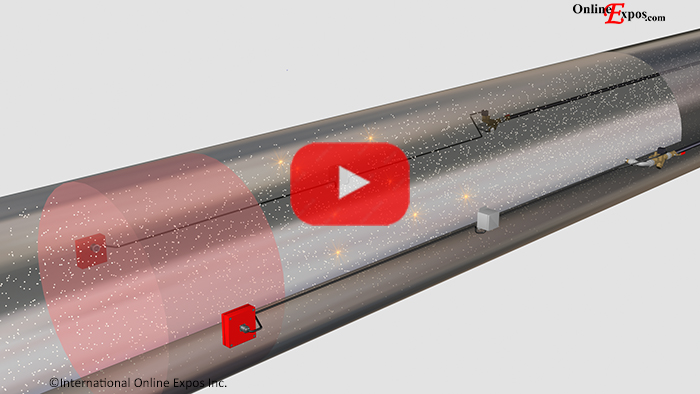
The system detects sparks in the duct air stream. When a preset quantity of sparks are detected, a signal will be sent to the extinguishing system. If the sparks reach a higher preset level, a signal will be sent to the abort gate to divert the material to atmosphere and shut down the processing equipment.
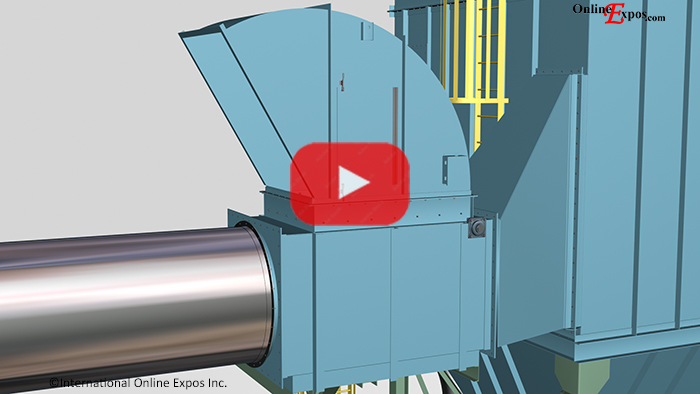
The abort gate will automatically open with a signal form the spark detection system indicating fire in the ductwork. With the abort gate open, the material is diverted to atmosphere.
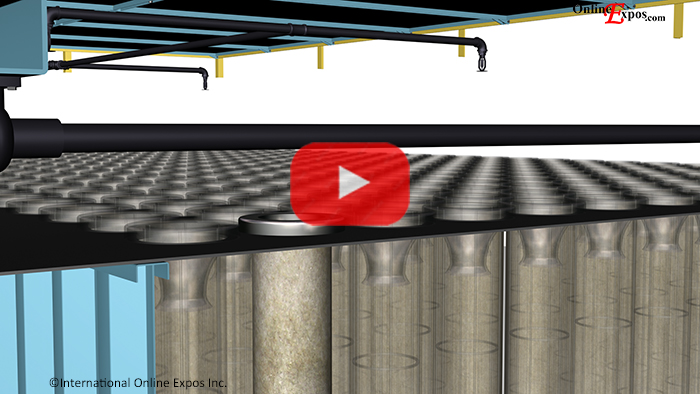
Particle laden air enters through the high entry inlet. This incoming air strikes the baffle plates, causing the heavier material to fall to the bottom hopper. The air with the lighter and smaller materials is filtered by the bags and clean air is exhausted to atmosphere.
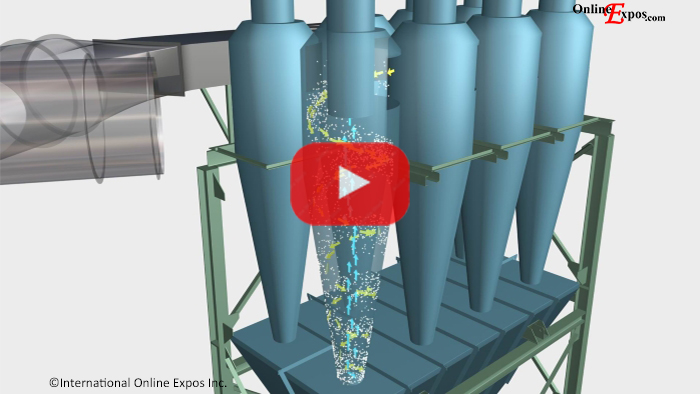
The dust laden air enters into the multiclone through the intake collector linking the tangential air intakes of the cyclones. The centrifugal action of each cyclone causes the particles to fall into a common hopper where they are exited through an air lock. The clean air is evacuated into the atmosphere.
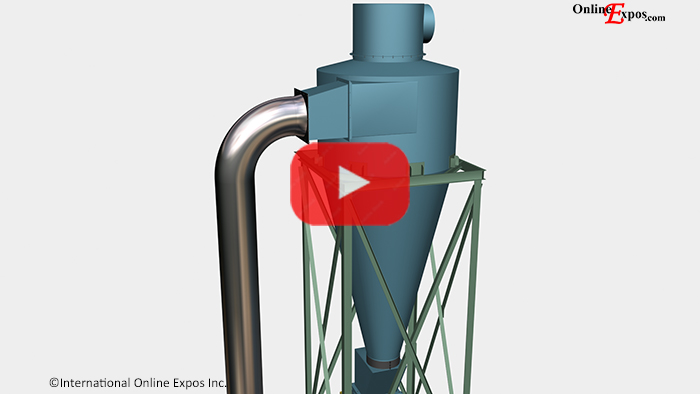
Particle laden air enters through the inlet. The high turbulence breaks the heavier and lighter materials apart. The spinning air throws the heavier materials outward to the cyclone walls.
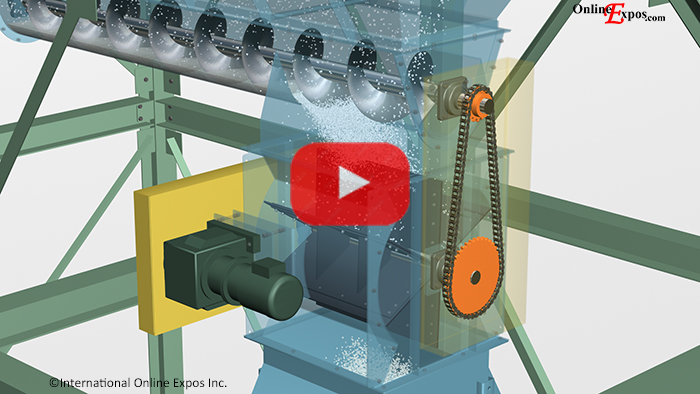
Air locks and rotary airlock systems allow material (chips, sawdust) to pass from a cyclone or baghouse to a bin or high pressure feeder. The air lock maintains a tight, positive air seal.
Industrial dust collection and mitigation systems are designed to capture, transport, separate, and safely dispose of airborne dust and particulate generated during manufacturing processes. In wood processing, mass timber production, sawmilling, and engineered wood manufacturing, these systems help maintain workplace safety, improve product quality, protect equipment, and reduce the risk of fire and dust explosions.
A typical dust collection system consists of hoods and pickup points, ductwork, fans, separators, filtration equipment, discharge devices, and fire and explosion protection systems. The system creates negative pressure to draw dust-laden air from production equipment and transport it to a central collection and filtration system.
In a typical wood processing facility, dust generated by saws, planers, molders, sanders, finger joint lines, CLT manufacturing equipment, and glulam production machinery is collected through a network of ducting connected to a central fan system. Material may first pass through cyclones or multiclones before entering a baghouse filter. Collected dust is discharged through rotary air locks into conveyors, storage bins, or fuel handling systems. Spark detection, extinguishing equipment, and abort gates provide fire protection throughout the system.
These integrated systems improve air quality, protect equipment, support regulatory compliance, enhance worker safety, and reduce the risk of catastrophic fires and dust explosions in industrial manufacturing environments.
Modern dust collection systems often incorporate explosion venting, explosion suppression systems, isolation valves, and fire detection equipment. These technologies are designed to prevent the propagation of deflagrations between process equipment and to safely relieve pressure generated by combustible dust explosions.
Facilities handling wood dust, biomass, agricultural products, or other combustible materials often design systems to comply with standards such as those published by National Fire Protection Association, including requirements for combustible dust hazard mitigation.
Spark detection systems provide early identification of ignition sources within pneumatic conveying and dust collection systems. Infrared sensors installed in ductwork continuously monitor material flow for sparks, embers, or hot particles generated by machinery malfunctions, metal strikes, overheating bearings, or friction.
When a spark is detected, the system initiates protective actions to prevent ignition from reaching combustible dust accumulations or filtration equipment.
Spark extinguishing systems are often integrated with spark detection equipment. Upon detection of a spark, high-speed water spray nozzles activate automatically within milliseconds to extinguish the ignition source while it remains inside the ductwork.
The extinguishing zone is carefully designed to ensure complete coverage of the duct cross-section without significantly affecting production. These systems help prevent fires and explosions from propagating into cyclones, baghouses, silos, or storage bins.
Abort gates provide an additional layer of protection for dust collection systems. When spark detection systems identify a fire risk, an abort gate automatically diverts the contaminated air stream away from critical equipment such as baghouses or filters.
The diverted air is typically discharged to a safe outdoor location, preventing sparks, flames, or burning material from entering dust collectors where combustible dust concentrations may be present. Abort gates are commonly used in conjunction with spark detection and extinguishing systems in high-risk wood processing applications.
Baghouses are among the most common industrial dust collection systems used in wood products manufacturing. They contain numerous fabric filter bags that trap dust particles while allowing clean air to pass through.
Dust accumulates on the exterior surface of the filter bags and is periodically removed using pulse-jet compressed air cleaning, reverse air cleaning, or mechanical shaking systems. The collected dust falls into a hopper for discharge.
Baghouses can achieve particulate collection efficiencies exceeding 99% and are capable of handling large air volumes generated by sawmills, planer mills, finger joint operations, CLT manufacturing facilities, and glulam plants.
Multiclones operate on the same principle as cyclones but contain multiple small cyclone tubes within a single housing. The smaller diameter cyclones generate higher centrifugal forces, allowing for more efficient separation of fine particles.
Multiclones are often installed upstream of boilers, thermal energy systems, or electrostatic precipitators to reduce particulate loading and improve downstream collection efficiency.
Cyclones are mechanical dust separators that use centrifugal force to remove larger particles from the air stream. Dust-laden air enters the cyclone tangentially, creating a vortex that forces heavier particles toward the outer wall where they fall into a collection hopper. Cleaner air exits through the center of the cyclone.
Cyclones are commonly used as pre-separators ahead of baghouses or other filtration systems to reduce filter loading and improve overall system efficiency. They are effective for larger wood chips, shavings, and coarse dust particles.
Rotary air locks, also known as rotary valves, are installed beneath cyclones, baghouses, and other dust collection equipment to discharge collected material while maintaining air system pressure.
A rotating vane assembly continuously transfers dust, chips, or fines from the collection hopper to downstream conveyors, bins, or storage systems without allowing significant air leakage. Rotary air locks are critical for maintaining system efficiency and preventing loss of suction.
Electrostatic precipitators remove fine particulate matter using electrically charged collection plates. As contaminated air passes through the unit, particles receive an electrical charge and are attracted to oppositely charged collection surfaces.
Periodic rapping mechanisms dislodge the accumulated particles, which fall into collection hoppers below. ESPs are commonly used in biomass combustion systems, dryers, boilers, and industrial process exhaust streams where very fine particulate removal is required.
Electrostatic precipitators provide high collection efficiency with relatively low pressure loss and energy consumption.
The Dust Collecting sector of Online Expos serves the wood products industry (sawmills, planermills remanufacturing, mass timber).
Sawmills & Planermills | Board Edgers | Canters, Bandmills & Sawboxes | Chippers & Chip Screens | Debarkers, Hogs & Flare Reducers | Dry Kilns & Lumber Drying | Energy Systems | Gang Edgers | Log Merchandisers & Log Handling | Lumber Stackers | Lumber Trim & Sort | Optimization & Controls | Planers & Molders
Mass Timber | Beam Planers | CLT Presses | Finger Joint Machines | GLT Presses | Grade & Sort
Calculators, Tools & Technology | Dust Collecting | Mass Timber | Saws & Knives | Wood Characteristics