Select below to explore Online Expos visual resources for grading, cross cutting and sorting for finger joint blocks. Compare types of grading and sorting systems. Browse interactive graphics and technical guides.
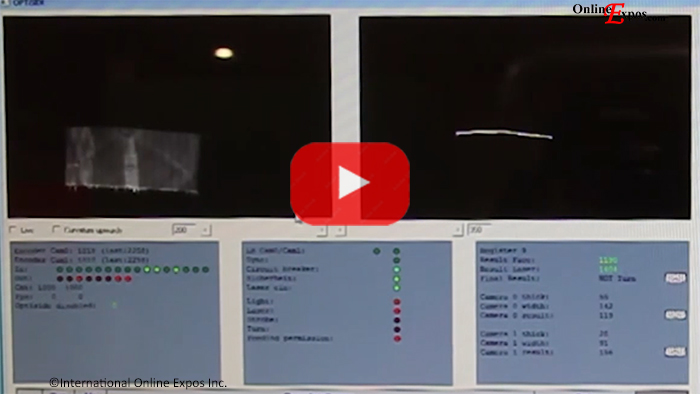
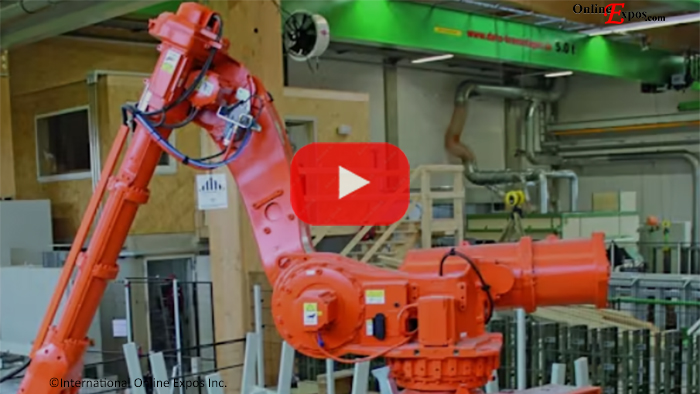
Video of Ledinek optimized grading and cross cut for finger joint blocks. Geometric and visual scanning. moisture and strength testing. See data sheet for detailed information.
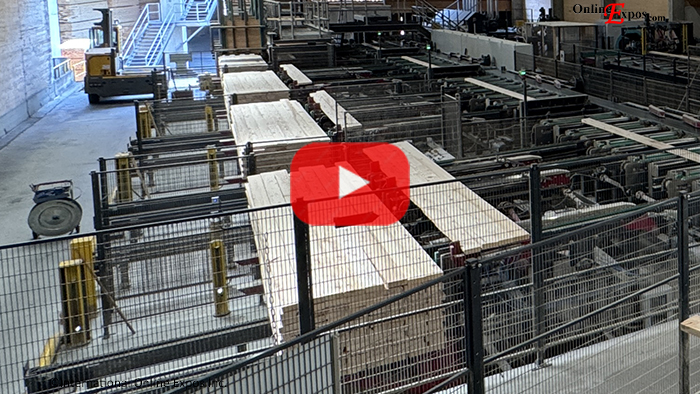
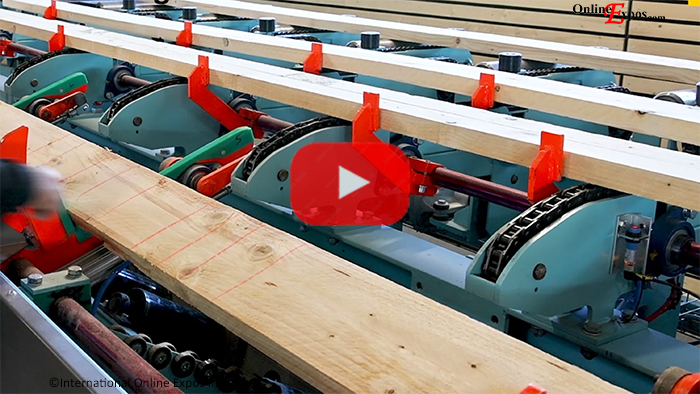
Video of Ledinek unstacking, manual marking and cross cut saw line. See data sheet for detailed information.
Functional Description
The production of finger-jointed blocks for engineered wood products such as glue laminated timber (GLT), cross laminated timber (CLT), laminated veneer lumber (LVL), and structural finger-jointed lumber begins with a highly automated process of scanning, grading, crosscutting, and sorting lumber or lamella. These systems are designed to maximize raw material recovery while ensuring that each piece meets the required structural and appearance specifications.
Lumber and Lamella Infeed:
The process typically begins with rough or planed lumber entering an automated infeed system. Boards may be singulated using unscramblers, lug loaders, or chain conveyors to provide a continuous flow of material to the scanning and grading equipment. Modern systems can process a wide range of dimensions and species at high production speeds.
Scanning and Defect Detection:
Advanced scanning systems inspect each board to identify characteristics that affect strength, appearance, and finger joint quality. Scanning technologies may include:
High-resolution color cameras
Laser profile scanners
X-ray scanners
Tracheid-effect scanners
Moisture measurement sensors
Warp and geometry scanners
These systems detect and measure defects such as:
Knots
Wane
Pitch pockets
Checks and splits
Decay
Bark inclusions
Crook, bow, and twist
Moisture variations
For structural products, machine stress rating (MSR) and machine evaluated lumber (MEL) systems may be incorporated to estimate modulus of elasticity (MOE), density, and strength properties.
Optimization and Grading:
Specialized optimization software analyzes scan data and determines the best cutting solution for each board. The system identifies defect-free sections and assigns grades based on product requirements.
Optimization objectives may include:
Maximum fiber recovery
Maximum structural value
Maximum appearance value
Production of specified block lengths
Balancing downstream production requirements
Boards may be sorted into multiple grades, including structural, industrial, appearance, and reject categories.
Crosscutting Systems:
Once the optimal cutting pattern has been determined, the lumber passes through an automated crosscut saw system. Common equipment includes:
Flying crosscut saws
Servo-controlled optimizing saws
High-speed chop saws
Multi-saw crosscut systems
The optimizer removes defects and cuts the board into shorter clear sections suitable for finger jointing. Modern systems can perform multiple cuts within a single board while maintaining high throughput and dimensional accuracy.
Crosscut lengths are typically selected to maximize recovery and meet the requirements of the downstream finger joint line.
Piece Tracking and Identification:
Many systems maintain individual piece tracking throughout the process. Barcode readers, inkjet marking systems, RFID technology, or production databases can be used to identify and trace each block.
Traceability systems may record:
Species
Grade
Moisture content
Strength classification
Production date and time
Source lumber information
This information supports quality control and certification requirements.
Sorting and Accumulation:
After crosscutting, the finger joint blocks are automatically sorted into bins, pockets, or accumulation conveyors. Sorting criteria may include:
Length
Grade
Species
Moisture content
Structural classification
Product destination
Sorter systems commonly utilize:
Linear chain sorters
Lugged transfer systems
Bin sorters
Gate sorters
Robotic handling systems
The sorter accumulates sufficient quantities of similar blocks for efficient finger jointing operations.
Finger Joint Block Preparation:
Before entering the finger joint machine, blocks may undergo additional processing such as:
End trimming
Moisture equalization
Surface planing
Dimensional verification
Visual quality inspection
Proper sorting ensures that blocks with similar characteristics are joined together, improving product consistency and structural performance.
System Integration:
Modern scanning, grading, crosscutting, and sorting lines are fully integrated through centralized control systems. Production data from scanners, optimizers, saws, and sorters are shared in real time, allowing operators to monitor recovery, grade yields, production rates, and equipment performance.
These automated systems enable lumber manufacturers and mass timber producers to maximize fiber utilization, reduce waste, improve product quality, and supply consistent finger-joint blocks for high-performance engineered wood products.
Industries Served by Online Expos/Grade & Sort:
The Grade and Sort section of Online Expos serves the grade, crosscut and sort sector of finger jointing for mass timber manufacturing.
Types of Wood Products Equipment and Resources Available to View on Online Expos: