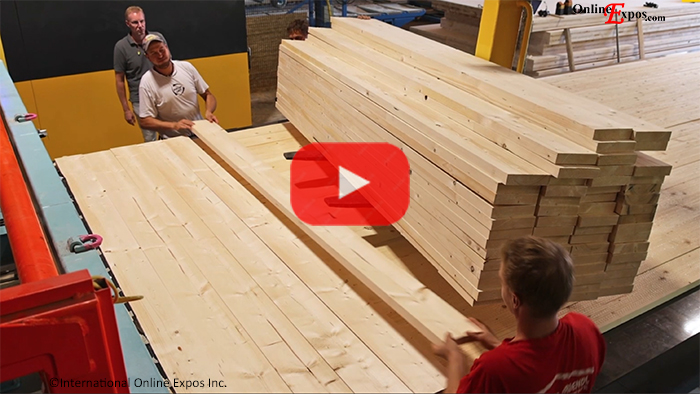
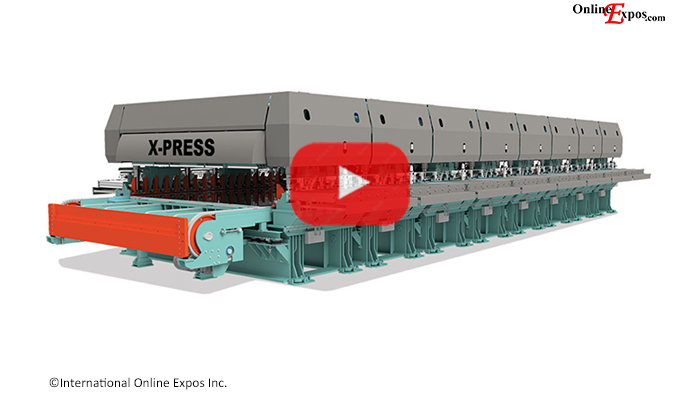
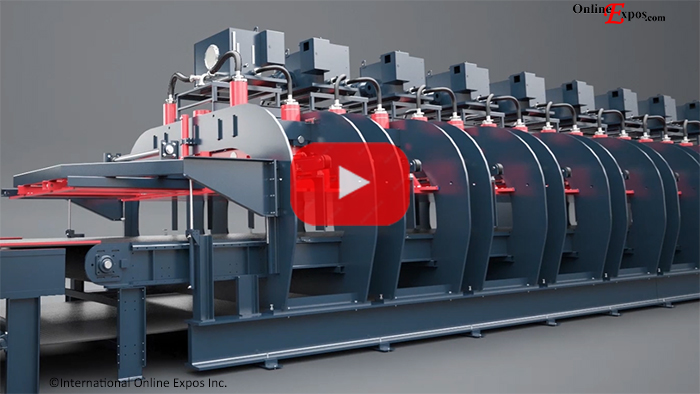
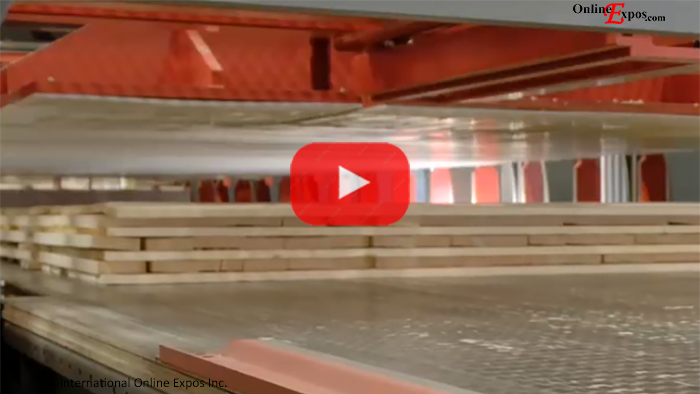
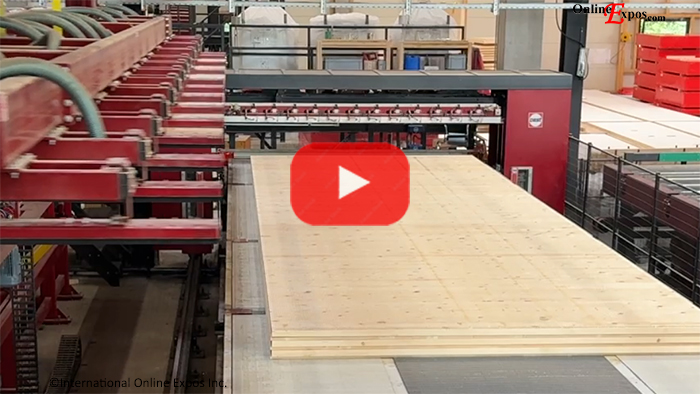
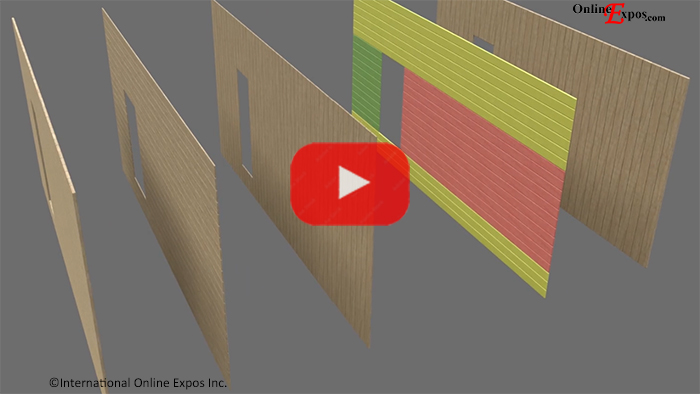
Animation of Minda CLT line showing a wall panel billet with cutouts example. See data sheet for detailed information.
Functional Description
Cross Laminated Timber (CLT) Presses:
Cross Laminated Timber (CLT) presses are specialized systems used to apply pressure during the bonding and curing process of CLT panels. After layers of lumber are arranged with alternating grain directions and adhesive is applied, the press ensures consistent contact between laminations while the adhesive cures. Pressing technology plays a critical role in panel quality, bond strength, dimensional stability, production speed, and overall manufacturing efficiency.
Modern CLT production facilities utilize a variety of pressing technologies, including hydraulic, pneumatic, electric, vacuum, and radio frequency (RF) systems. Press designs may be configured for batch production, continuous production, or flexible manufacturing environments capable of producing panels with varying dimensions and thicknesses.
Hydraulic Presses:
Hydraulic presses are among the most widely used CLT pressing systems. They utilize hydraulic cylinders to generate high clamping forces across large panel surfaces. Hydraulic systems provide precise pressure control and are capable of producing the substantial forces required for thick or large-format CLT panels.
These presses often incorporate both vertical and horizontal pressure application to ensure proper bonding between layers and to maintain panel alignment during curing. Hydraulic presses are valued for their reliability, versatility, and ability to accommodate a wide range of panel sizes and product specifications.
Pneumatic Presses:
Pneumatic presses use compressed air cylinders to apply pressure to CLT assemblies. While generally producing lower forces than hydraulic systems, pneumatic presses offer simpler operation, lower maintenance requirements, and rapid cycling capabilities.
Pneumatic technology is commonly used for side-pressure systems, panel alignment devices, and smaller-scale CLT production lines. In some applications, pneumatic components are combined with hydraulic systems to provide both positioning and pressing functions.
Electric Presses:
Electric presses utilize servo-driven actuators or electromechanical screw systems to generate pressing force. These systems provide highly accurate positioning, force control, and repeatability while eliminating the need for hydraulic fluids.
Electric presses can offer reduced energy consumption, lower maintenance requirements, and improved process monitoring. Advanced control systems allow manufacturers to precisely manage pressure profiles, pressing times, and panel thickness tolerances. Electric pressing technology is increasingly being adopted in automated CLT production environments focused on energy efficiency and digital manufacturing integration.
Vacuum Presses:
Vacuum pressing systems utilize atmospheric pressure to apply uniform force across the surface of a CLT assembly. Panels are enclosed within a sealed membrane or vacuum chamber, and air is removed to create pressure differentials that compress the lumber layers together.
Vacuum presses provide highly uniform pressure distribution and can be effective for specialty panels, curved assemblies, prototype production, or smaller manufacturing operations. Although vacuum systems typically generate lower pressures than hydraulic presses, they offer flexibility and can accommodate a variety of panel geometries.
Radio Frequency (RF) Presses:
Radio Frequency (RF) presses combine conventional pressing forces with high-frequency electromagnetic energy to accelerate adhesive curing. RF energy generates heat directly within the wood and adhesive bond line, reducing curing times compared to conventional cold pressing methods.
RF presses are often integrated with hydraulic, pneumatic, or electric pressing systems that provide the required mechanical pressure while the RF system supplies curing energy. These systems are particularly attractive for high-volume production facilities seeking increased productivity and reduced floor space requirements.
Cold Presses:
Cold presses cure adhesives at ambient temperatures without the addition of external heat. These systems typically use hydraulic, pneumatic, electric, or vacuum pressure mechanisms to maintain contact between lumber layers while the adhesive cures naturally.
Cold pressing is widely used in CLT manufacturing because many structural wood adhesives are specifically formulated for room-temperature curing. Cold press systems generally require longer pressing times than RF or heated systems but offer lower equipment complexity and reduced energy consumption. They remain a proven and cost-effective solution for many CLT manufacturers worldwide.
Multi-Directional Pressing Systems:
Many modern CLT presses incorporate multi-directional pressing technology that applies pressure vertically and horizontally simultaneously. Vertical pressure consolidates the lumber layers, while horizontal pressure minimizes gaps between adjacent boards and improves panel dimensional accuracy.
These systems help ensure uniform adhesive distribution, enhanced bond quality, and improved panel appearance. Automated positioning systems, laser measurement devices, and computerized controls are frequently integrated to optimize production efficiency and product consistency.
Industry Trends:
Recent developments in CLT pressing technology focus on increased automation, faster production cycles, improved energy efficiency, and enhanced quality control. Manufacturers are increasingly adopting servo-electric systems, RF curing technology, automated loading and unloading systems, and real-time process monitoring to improve productivity and reduce manufacturing costs.
As demand for mass timber construction continues to grow, advanced CLT pressing systems are becoming an essential component of efficient, high-capacity production facilities capable of producing large structural panels with consistent quality and performance.
Industries Served by Online Expos/CLT Presses:
The CLT Presses section of Online Expos serves the cross laminated timber sector of mass timber manufacturing.
Types of Wood Products Equipment and Resources Available to View on Online Expos: