Home » Mass Timber » GLT Presses
Select below to explore Online Expos visual resources for glulam press equipment and technology. Compare types of glue laminated timber (GLT) presses. Browse interactive graphics and technical guides.
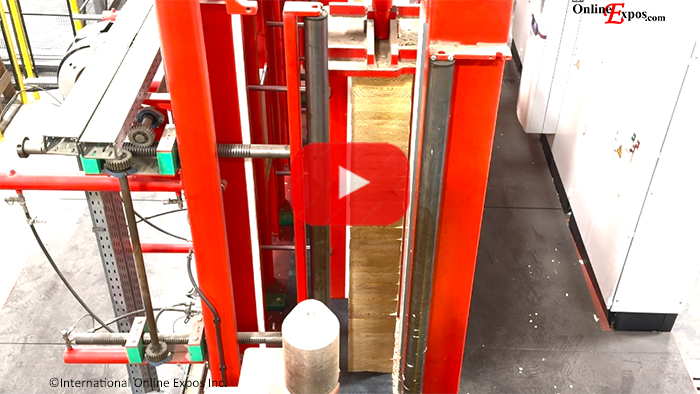
Video of MINDA vertical glulam (GLT) press. See data sheet for detailed information.
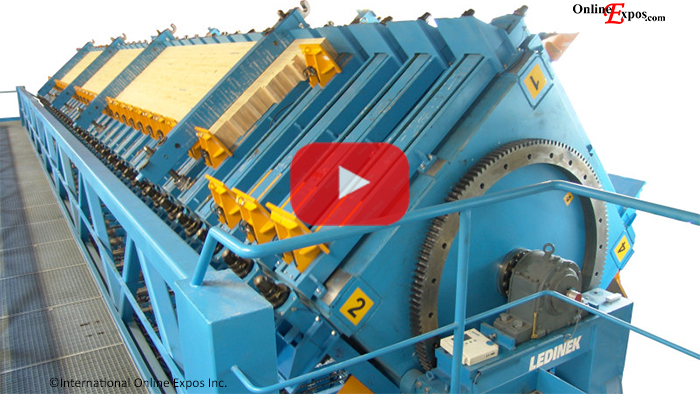
Video of Ledinek rotary glulam (GLT) press. See data sheet for detailed information.
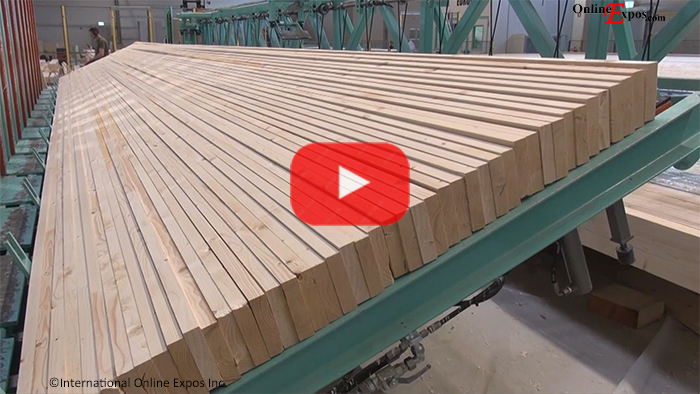
Video of Ledinek heavy-duty Gigapress for glulam (GLT). The system uses a horizontal loading arrangement with vertical pressing forces. See data sheet for detailed information.
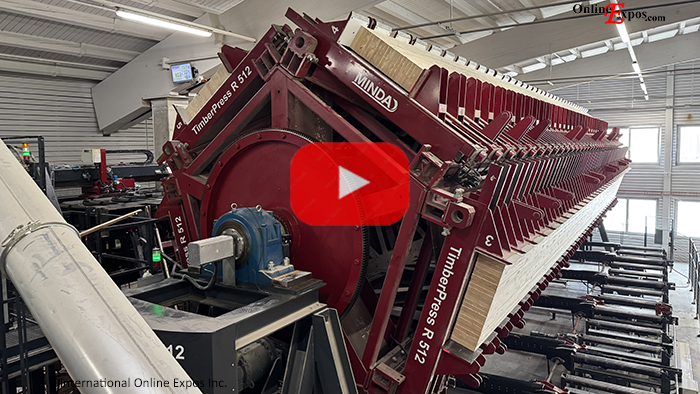
Video of Minda rotary glulam (GLT) press. See data sheet for detailed information.
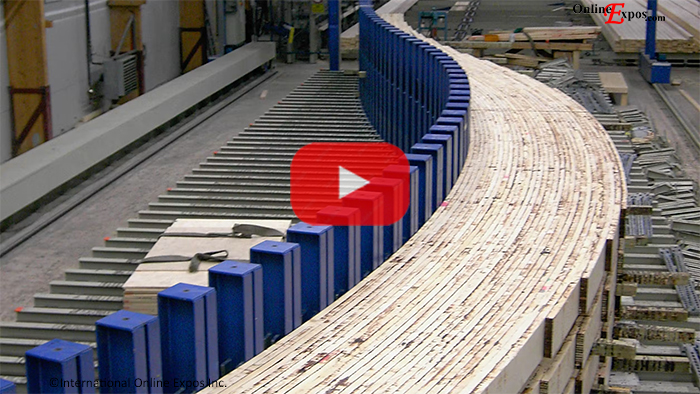
Video of Minda glulam (GLT) press for curved beams. See data sheet for detailed information.
Presses are a critical component in the manufacture of glue laminated timber (glulam or GLT), providing the clamping force required to bond multiple lumber laminations into large structural beams, columns, arches, and other engineered wood products. Press systems are designed to maintain proper alignment, apply uniform pressure across the bond line, and hold laminations in position while adhesives cure.
Cold presses are the most common type of glulam press. These systems apply mechanical pressure to glued laminations while the adhesive cures at ambient temperature. Modern structural adhesives such as melamine-urea-formaldehyde (MUF), polyurethane (PUR), and emulsion polymer isocyanate (EPI) are commonly used in cold pressing applications.
Cold presses typically offer lower capital and operating costs than heated systems and are well suited for both straight and curved glulam production. Pressing cycles generally range from several hours to overnight, depending on adhesive type, beam dimensions, moisture content, and ambient conditions.
Radio frequency (RF) presses accelerate adhesive curing by generating high-frequency electromagnetic energy within the wood assembly. RF energy heats the adhesive bond line and surrounding wood from the inside outward, significantly reducing cure times compared to conventional cold pressing.
RF glulam presses can reduce pressing cycles from hours to minutes, increasing production throughput and reducing work-in-process inventory. These systems are particularly valuable for large cross-sections, thick beams, and curved members where rapid curing can improve manufacturing efficiency. RF technology is often combined with hydraulic or pneumatic clamping systems to provide both pressure and heat during the bonding process.
Hydraulic presses are the most widely used press type in industrial glulam manufacturing. Hydraulic cylinders generate high clamping forces and provide precise pressure control across the beam length and width.
Advantages of hydraulic presses include:
Hydraulic presses are commonly configured with side-pressure cylinders, top-pressure cylinders, or a combination of both to ensure complete adhesive contact between laminations.
Pneumatic presses utilize compressed air cylinders to apply clamping pressure. These systems are generally less expensive and simpler than hydraulic presses and are commonly used for smaller glulam members or lower-production facilities.
Advantages include:
While pneumatic systems provide adequate pressure for many applications, their maximum force is generally lower than that of hydraulic presses, limiting their use for very large structural members.
Electric presses employ servo-driven actuators or electromechanical screw systems to generate clamping force. Advances in servo technology have increased the use of electric pressing systems where precise pressure control and energy efficiency are important.
Benefits include:
Electric presses are commonly used in specialized glulam applications and automated production environments where repeatability and process monitoring are critical.
Vacuum pressing systems use atmospheric pressure to compress glued laminations by enclosing the assembly within a flexible vacuum membrane or vacuum chamber. As air is removed, atmospheric pressure applies a uniform load over the entire surface.
Vacuum presses are particularly useful for:
Because vacuum systems typically provide lower maximum pressures than hydraulic presses, they are often used for specialty applications rather than high-volume structural beam production.
Rotary glue laminated timber presses are continuous or semi-continuous pressing systems designed to increase production efficiency and reduce floor space requirements. Unlike conventional fixed-bed presses, rotary presses use a rotating carousel, drum, or indexing framework that moves beam assemblies through various stages of pressing and adhesive curing.
In a typical rotary press, glued laminations are assembled into beam packages and loaded into individual press stations mounted around a rotating structure. As the carousel rotates, each beam remains under controlled clamping pressure while progressing through the curing cycle. By the time the assembly completes a full rotation, the adhesive has reached sufficient strength for unloading and further processing.
Rotary press systems may utilize hydraulic, pneumatic, electric, or hybrid clamping mechanisms depending on production requirements and beam dimensions. Some systems incorporate radio frequency (RF) curing technology to further reduce cure times and increase production throughput.
Key advantages of rotary glulam presses include:
Rotary presses are particularly well suited for manufacturers producing high volumes of straight glulam beams with standardized dimensions. The continuous movement of the system allows loading, pressing, curing, and unloading operations to occur simultaneously at different stations around the carousel.
While most rotary press installations are designed for straight beams, specialized rotary systems can also accommodate mildly curved members through the use of custom fixtures and adjustable clamping assemblies. However, highly curved beams and architectural arches are generally produced using dedicated form presses or specialized curved-beam pressing systems.
Modern rotary glulam presses are often integrated with automated lumber layup systems, adhesive application equipment, beam identification systems, and computerized process controls, creating highly efficient manufacturing cells capable of producing large volumes of structural glulam with consistent quality and repeatability.
Presses for Curved Beams and Arches:
Curved glulam beams, arches, and architectural members require specialized press systems capable of maintaining precise geometry throughout the curing process. The glued laminations are assembled around a fixed form or mold that defines the final shape of the member.
Several press technologies are used for curved beam production:
Form Presses
Form presses use rigid steel or timber molds combined with hydraulic, pneumatic, or mechanical clamping systems. Laminations are bent against the form while adhesive cures, producing accurate and repeatable curved profiles.
Hydraulic Arch Presses
Large hydraulic presses are commonly used for structural arches and long-span curved members. Multiple cylinders positioned along the beam length apply controlled pressure to maintain uniform bonding and curvature.
Vacuum Form Presses
Vacuum membrane systems are frequently used for architectural glulam elements with complex curves. The vacuum bag conforms to the shape of the assembly, applying pressure evenly across irregular surfaces.
RF Curved Beam Presses
Radio frequency technology can be integrated with curved molds and hydraulic clamping systems to significantly reduce curing times for curved beams and arches. This combination is often used when high production volumes or large member dimensions justify the additional equipment investment.
Modern glulam press lines increasingly incorporate automated material handling, computerized pressure control, adhesive monitoring, and production data collection. Integrated systems may include automatic lamination loading, side-pressure control, beam alignment systems, and programmable curing cycles.
These advanced press systems improve bond quality, increase production throughput, reduce labor requirements, and provide traceability for structural certification programs used throughout the mass timber industry.
The GLT Presses section of Online Expos serves the gluing and pressing sector of glue laminated timber manufacturing.
Sawmills & Planermills | Board Edgers | Canters, Bandmills & Sawboxes | Chippers & Chip Screens | Debarkers, Hogs & Flare Reducers | Dry Kilns & Lumber Drying | Energy Systems | Gang Edgers | Log Merchandisers & Log Handling | Lumber Stackers | Lumber Trim & Sort | Optimization & Controls | Planers & Molders
Mass Timber | Beam Planers | CLT Presses | Finger Joint Machines | GLT Presses | Grade & Sort
Calculators, Tools & Technology | Dust Collecting | Mass Timber | Saws & Knives | Wood Characteristics