Board Edgers | Linear, Transverse & Reman Edgers for Sawmills
Select below to view video or information on transverse and lineal optimized board edgers. See how board edgers improve lumber recovery and value. Compare linear, transverse, reman optimized board edging systems.
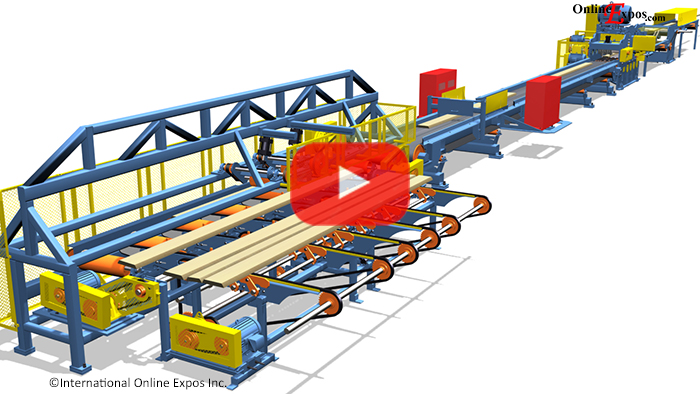
Linear (lineal) scanned optimized board edger with remanufacturing head. Feed speeds to 1,200 feet per minute. Piece counts to 36 pieces per minute on 20′ lumber.
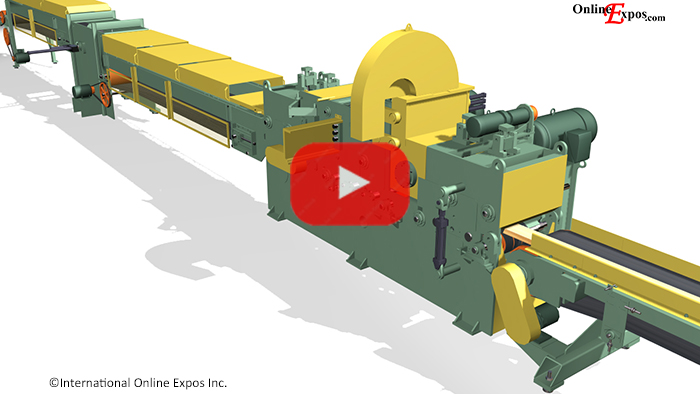
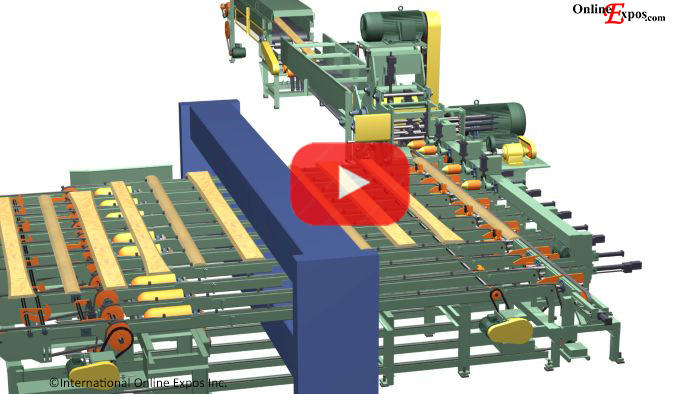
Transverse scanned optimized board edger with remanufacturing head. Feed speeds to 1,200 feet per minute. Piece counts to 36 pieces per minute on 20′ lumber.
Functional Description:
Board edgers are used to process flitches into nominal sized boards. The flitches are scanned and optimized for the highest value. The flitch is processed through the edger producing boards and tailings (edgings). At the outfeed of the edger the tailings are diverted to a chipper. In the case of a chipping edger, the wane is chipped off in the edging process and there are no tailings to handle. The lumber is sent to the trimmer for further processing.
The edging process begins when a flitch or rough board enters the machine. Scanning systems measure the shape, dimensions, wane, defects, and available fiber. Optimization software calculates the highest-value cutting solution based on mill objectives.
The board is then positioned and processed through one or more saws to remove irregular edges and produce lumber that meets target dimensions and quality requirements.
Edging systems can optimize for:
Maximum lumber recovery
Highest product value
Grade recovery
Production throughput
Product mix requirements
Market demand objectives
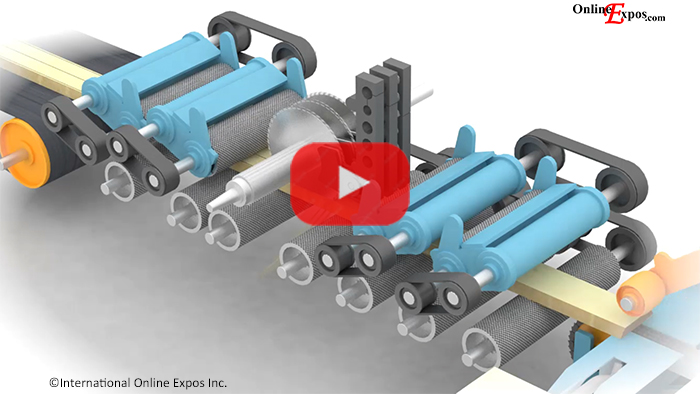
Feedrolls and bed chains, along with overhead press rolls, control the flitch through the edger. Saws mounted on the arbor position to edge the flitches. The tailing on a saw edger is done with shifting fingers, picker fingers or shifting belts.
Industries Served by Online Expos/Solid Wood/Board Edgers:
The Board Edgers section of Online Expos serves the solid wood sector (sawmills, planermills, remanufacturing).
Types of Board Edgers:
Lineal Board Edgers
Linear board edgers process lumber longitudinally through the machine. The board travels parallel to the saws while optimization systems determine the ideal cutting solution. The saws skew and slew across the flitch as the flitch is traveling through the edger.
Benefits include:
High production capacity
Consistent lumber flow
Excellent recovery performance
Integration with automated sawmill systems
Transverse Board Edgers
Transverse board edgers process boards across the scanners rather than lengthwise. This design allows each piece to be individually scanned, positioned, and optimized before cutting. The saws are positioned for the optimum solution and held stationary as the flitch is traveling through the edger.
Benefits include:
Excellent value recovery
Individual board optimization
Flexible product solutions
Superior handling of irregular material
Reman Board Edgers
Remanufacturing board edgers have a top chipping head to reduce the thickness of a flitch to remove face defect.
Applications include:
Stud mills
Appearance-grade lumber
Specialty wood products
Value-added manufacturing
Reman board edgers incorporate advanced scanning systems to maximize product value and grade recovery.
Chipping Board Edgers
Chipping board edgers combine edging and chip production into a single process. Chipping heads remove excess wood while producing chips suitable for pulp, paper, biomass, or panelboard manufacturing.
Board Edger Optimization Systems
Modern board edgers rely heavily on scanning and optimization technology. Typical optimization systems include:
Laser scanning
Vision scanning
3D profiling
Shape recognition
Defect detection
Value optimization software
Optimization systems continuously evaluate each board and determine the cutting solution that produces the highest return while meeting production goals.
Benefits of Modern Board Edgers:
Increased Lumber Recovery – Optimized edging systems maximize usable fiber and increase finished lumber yield from each sawn flitch.
Improved Product Value – Advanced scanning and optimization allow mills to target higher-value products and improve overall profitability.
Reduced Waste – Efficient edging reduces trim loss and minimizes fiber waste throughout the production process.
Higher Throughput – Automated board edgers operate at high production speeds while maintaining cutting accuracy and product quality.
Better Product Consistency – Precise positioning and cutting systems improve dimensional accuracy and help produce consistent lumber products.
Types of Wood Products Equipment and Resources Available to View on Online Expos: