Natural lumber characteristics arise from tree growth, injury, and biological activity. Some can also develop or become apparent after felling. These descriptions explain how to identify characteristics and their effects on appearance, processing, or performance. A characteristic may be acceptable or desirable for one use and restricted for another; acceptance depends on its extent and the applicable grading rules.
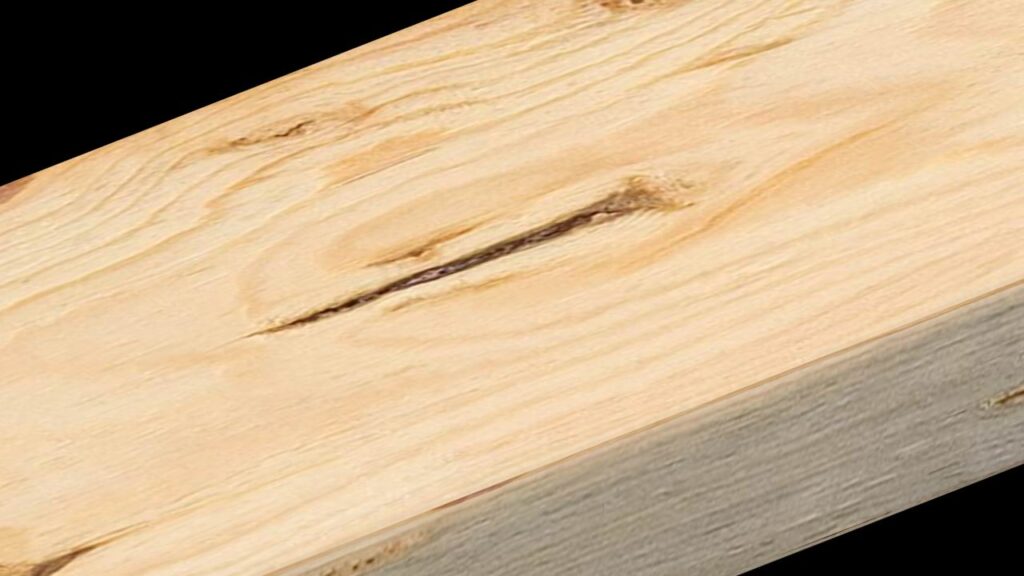
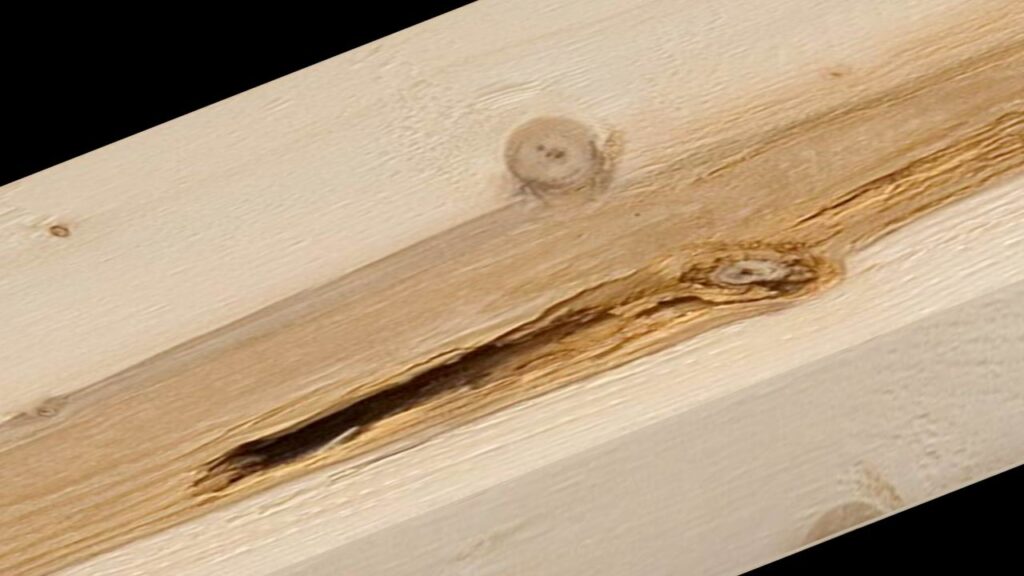
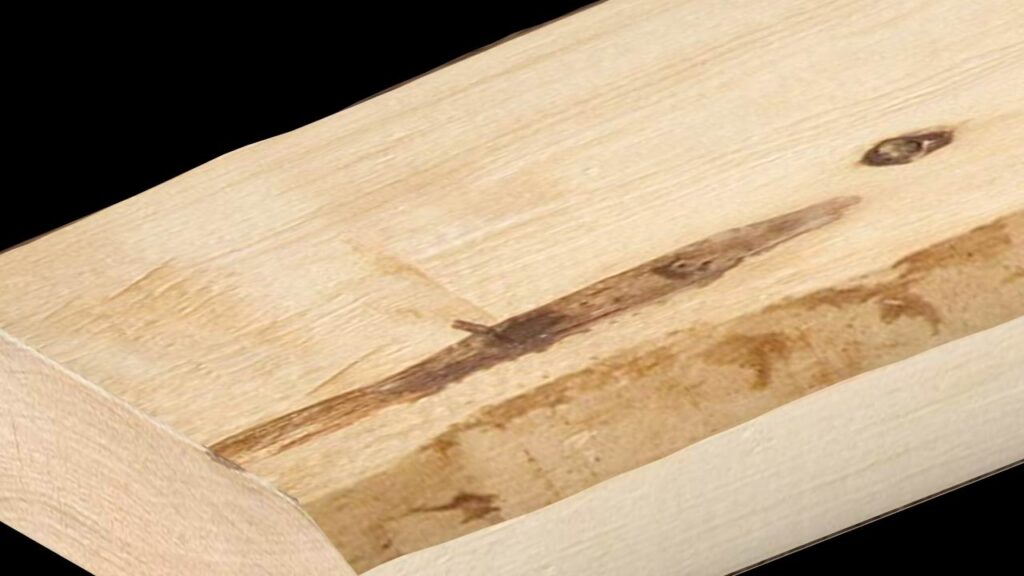
Bark Pocket
A localized inclusion of bark within the wood, commonly appearing as a lens shaped seam or cavity between growth layers. It forms when new growth encloses bark, often following injury or an irregularity in stem growth. A bark pocket may also contain pitch; a pitch pocket contains resin without necessarily containing bark. When exposed by sawing, the inclusion can interrupt surface continuity and reduce the amount of sound wood available for machining or joining.
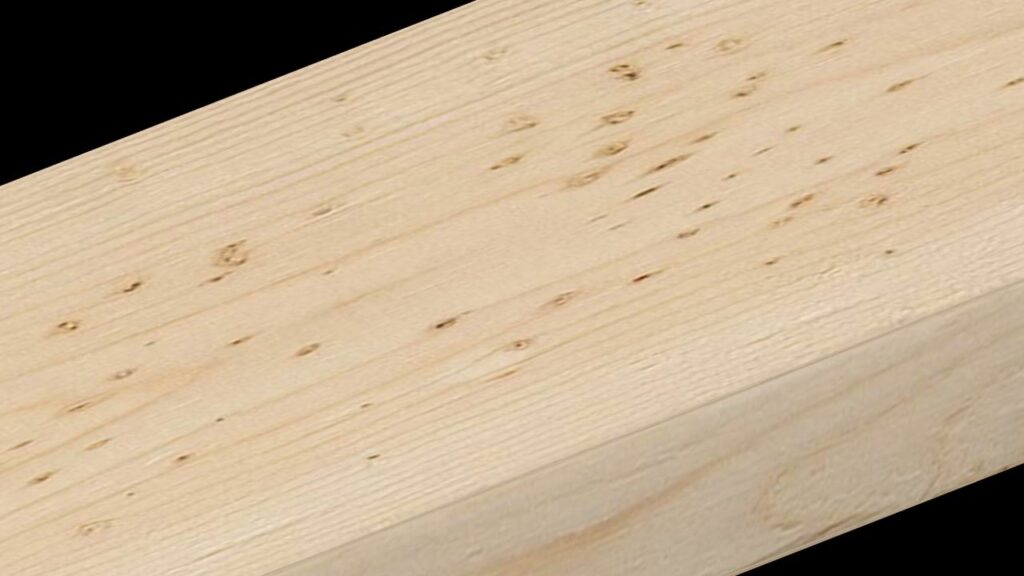
Birdseye
A figured grain pattern consisting of numerous small, rounded or elliptical markings resembling eyes. The pattern results from localized indentations of the growth rings and associated changes in fibre direction, and is especially associated with sugar maple. Its underlying cause is not fully established. Birdseye may be valued for decorative lumber and veneer, although the changing grain direction can complicate machining. Similar looking figure in other species should not automatically be assumed to have the same origin.
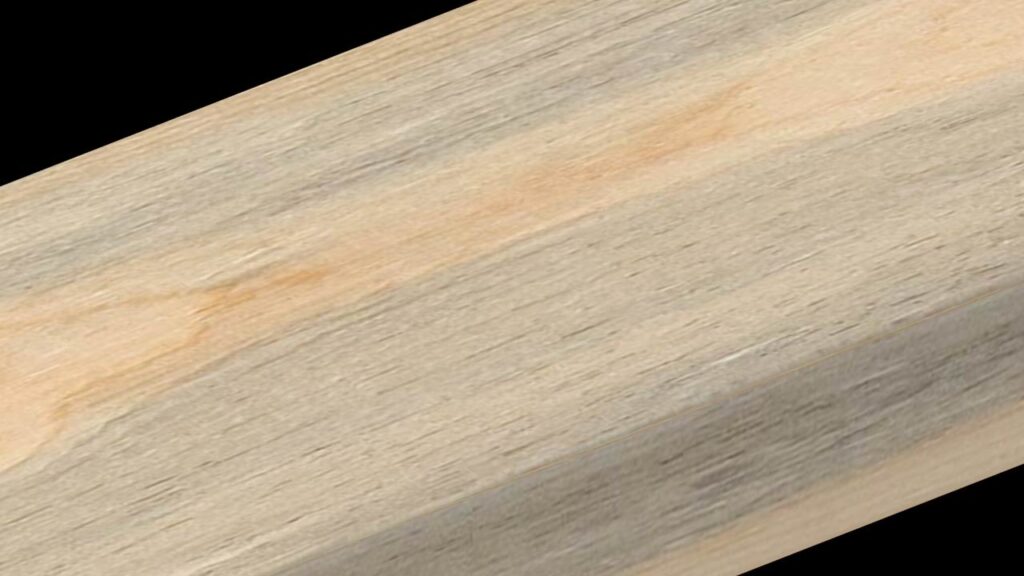
Blue Stain
A blue, grey, or blue black discoloration caused by staining fungi growing primarily in sapwood under favourable moisture and temperature conditions. The colour may penetrate below the surface and remain after planing. Blue stain mainly affects appearance and generally has little effect on most strength properties, although toughness can be affected. It is distinct from decay, but the two can coexist; stained wood should therefore be assessed for any accompanying deterioration.
Compression Wood
A type of reaction wood formed in coniferous trees, typically on the underside of leaning stems or branches, as part of the tree’s response to displacement. It often appears darker or reddish brown, with unusually broad latewood zones, and can be hard and brittle. Its excessive shrinkage along the grain can cause bow, crook, or internal stresses during drying. Colour alone is insufficient for identification; growth ring structure and drying behaviour also matter.
Decay
Deterioration of wood substance caused by wood destroying fungi, also called rot or unsound wood. Advanced decay may produce softened, crumbly, fibrous, or cubically cracked material, depending on the fungus and wood involved. Incipient decay is an early stage that may show only slight discoloration without a perceptible change in hardness. Strength loss can begin before obvious softening develops, so apparently firm wood is not necessarily unaffected. Decay must be distinguished from discoloration caused solely by staining fungi.
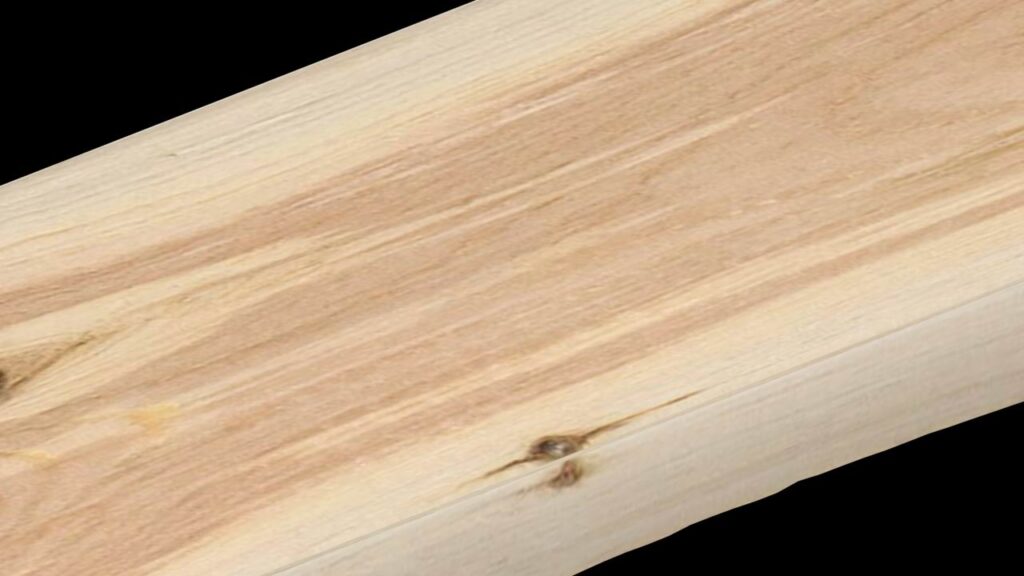
Heart Stain
An abnormal variation in heartwood colour, commonly appearing as irregular pink, reddish, or brown patches. It differs from normal heartwood colouring, which is generally distributed more consistently within particular growth rings. Heart stain describes appearance rather than establishing a single cause or confirming the condition of the wood. Firm stained heartwood must be distinguished from material showing decay; acceptance depends on the wood condition, intended use, and applicable grade.
Pith
The small central core of primary tissue formed during the earliest growth of a stem or branch, around which subsequent growth rings develop. It may appear as a small spot on an end section or as a narrow line along a sawn surface. Pith is softer and less structurally useful than surrounding wood. Lumber containing the pith also includes nearby juvenile wood and can be prone to checking and distortion during drying; the pith and juvenile wood are distinct tissues.
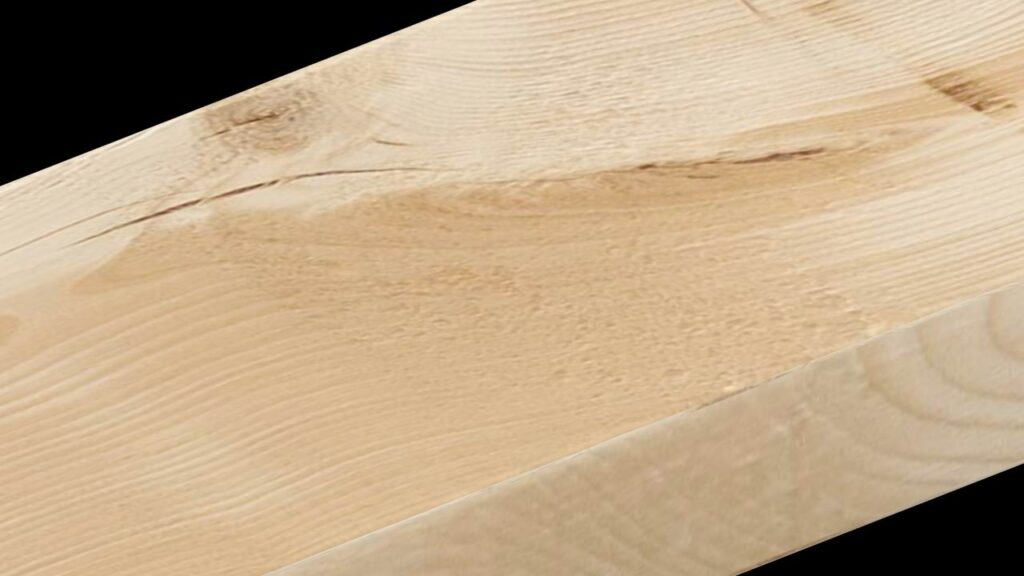
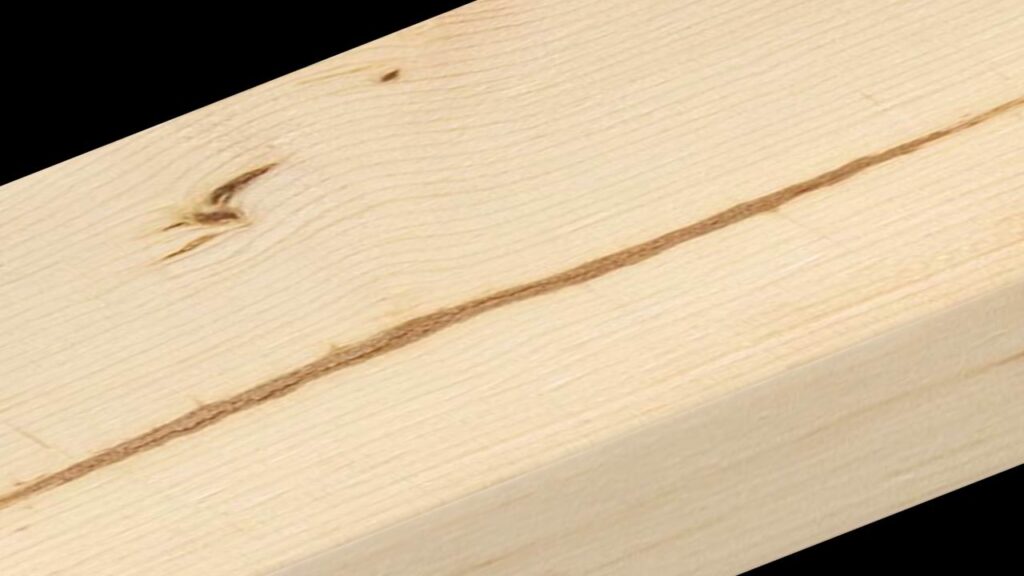
Ring Shake
A separation along the grain that follows a growth ring boundary and partially or completely encircles the pith when viewed on the end of a piece. On a longitudinal surface it may appear as a seam running along the lumber. The separation interrupts continuity between wood layers and can impair resistance to shear or cause layers to loosen during processing. Ring shake is identified by its path between growth rings; surface and through shake describe where a separation is exposed.
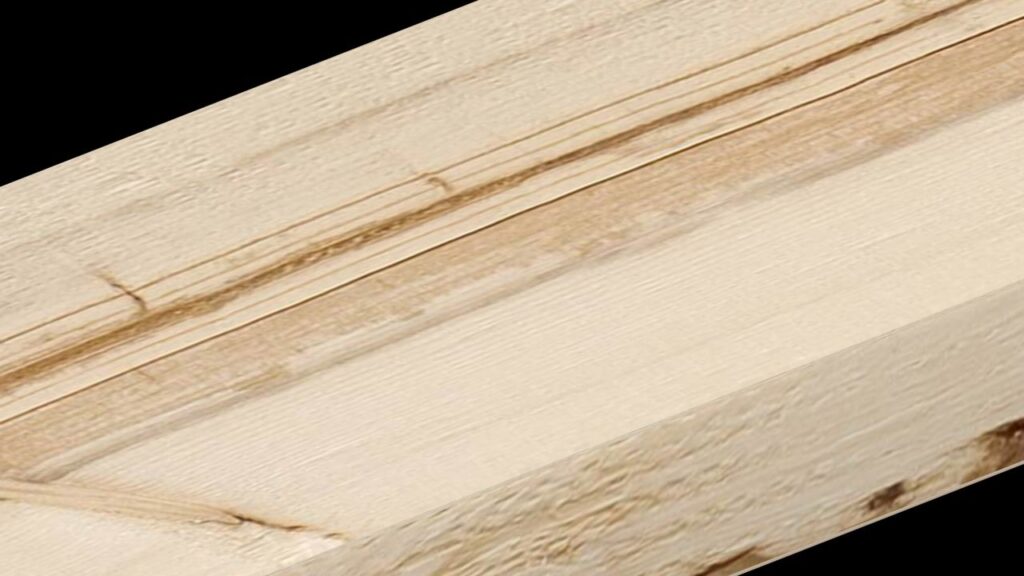
Wane
Bark or missing wood along an edge or corner of a piece of lumber, excluding intentional eased edges. It commonly occurs where the sawn piece includes part of the original rounded exterior of the log, leaving an incomplete rectangular profile. Wane may extend for part or all of the piece length. Its significance depends on its width, depth, length, and location, particularly where a full edge or corner is needed for bearing, fastening, or a finished joint.
Technical references
National Lumber Grades Authority. Standard Grading Rules for Canadian Lumber, 2025. Glossary: compression wood, decay, pith, pockets, shake, stained wood, and wane. View source
USDA Forest Service. Field Identification of Birdseye in Sugar Maple, Research Paper NC-317. Anatomy and identification of birdseye figure. View source
USDA Forest Service, Forest Products Laboratory. Air Drying of Lumber, General Technical Report FPL-GTR-117. Blue stain and decay. View source