Home » Calculators, Tools & Technology » Mass Timber
Select below to view calculators and information on Mass Timber equipment and process capacities. Browse interactive graphics and technical guides.
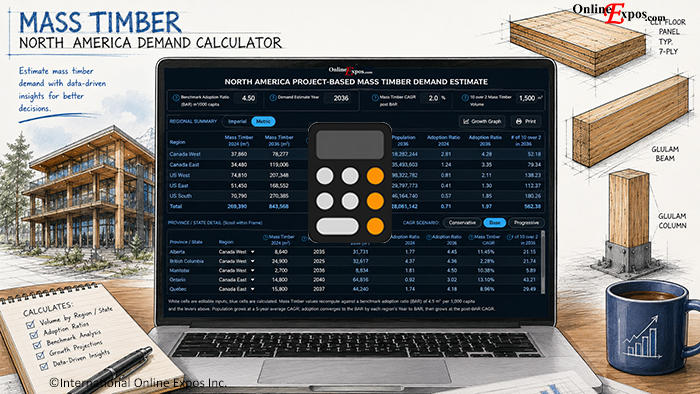
The interactive model calculates the estimated future demand for project based mass timber in North America. Select Model Notes, or see below for functional description of the calculator.
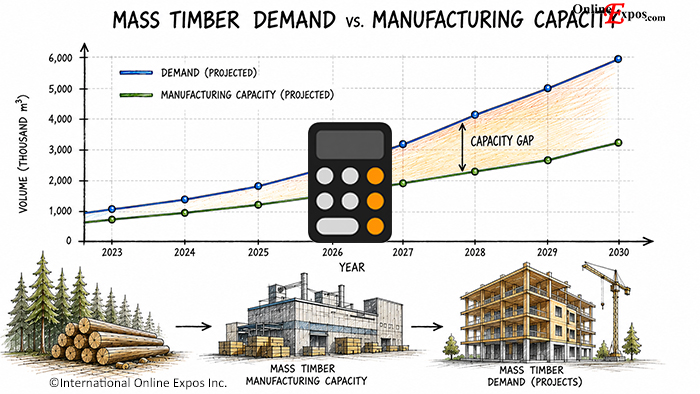
The interactive model calculates the manufacturing capacity gap for project based mass timber in North America. Select Model Notes, or see below for functional description of the calculator.
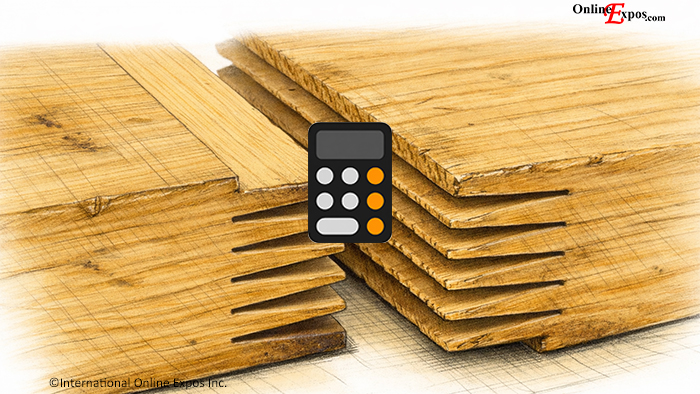
The interactive finger joint production capacity calculator is used to calculate the production capacity of a finger joint machine.
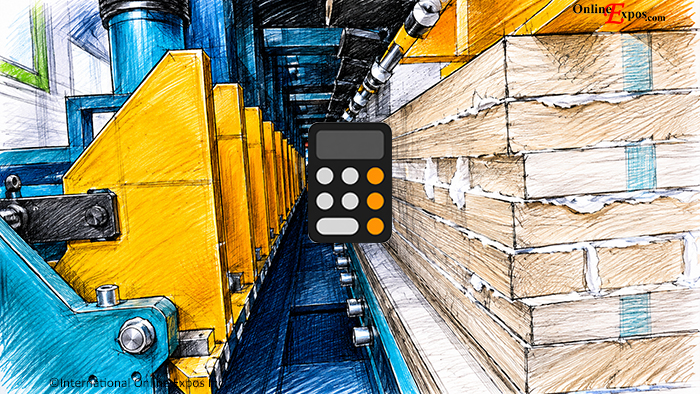
The interactive CLT cold press production capacity calculator is used to calculate the production capacity of a CLT press using PUR glue.
This section on Online Expos contains calculators and technical information on the manufacturing process for mass timber. Machine capacities and constraints can be calculated to determine factory output. Demand growth and manufacturing capacities can be estimated.
This demand model focuses on project-based mass timber (buildings with CLT, CLT / GLT combined or MPP). This would be the target products manufactured for a large scale CLT / GLT factory. It does not include commodity GLT, DLT, NLT or rig mats. The purpose is to project potential growth for determining opportunity for added factories. For calculating the economics of a large scale $140+ million factory it is important to understand the market segment. The inclusion of all of mass timber sectors in the market analysis could be misleading.
Estimating the future demand for mass timber is somewhat subjective. The famous aphorism “All models are wrong, but some are useful” was coined by the British statistician George E. P. Box. For a model to have a useful purpose it is critical that the input data is as accurate as possible.
The British Columbia (B.C.) mass timber ecosystem, from architecture through to construction, is at a higher level of maturity than most regions in North America. B.C. mass timber adoption will form the basis for the calculation of estimated demand for mass timber in North America. The current adoption ratio in B.C. is 4.5 m3/000 capita and is used as the Benchmark Adoption Ratio (BAR). Coincidently, the B.C. adoption ratio is similar to Europe which has been utilizing mass timber for over 35 years.
Estimating future demand based on historical North American consumption is difficult as most mass timber buildings in North America have been iconic or institutional buildings. Growth potential will not be realized until mass timber becomes mainstream in mid-rise multi family and office buildings. A mass timber specific grade of input lumber will also be required for growth of mass timber consumption to reach the levels of Europe.
For this model, each province and state is individually evaluated for growth based on the current maturity level in the mass timber sector. The 2024 mass timber consumption is based on the production volume, population, population growth and mass timber growth projections are based on Anthropic AI data. Note that the stated consumption for 2024 balances to the output of the existing North American factories leaving a bit for European import volume. The model allows users entry for current consumption estimates by province/state and the estimated year to reach the BAR. The summary output is separated into regions across North America.
The scenario buttons toggle to conservative, base or progressive compound annual growth rates. These rates are then converted to the year a province or state would reach the BAR. These growth rates are subjective based on low-medium-high estimates from Anthropic. The basis for progression is the state of the mass timber ecosystem. Progressive CAGR is a scenario where codes are in place and mainstream midrise buildings are being constructed with mass timber.
Feedback on current consumption by province/state and estimates on the year a province/state would reach the BAR would help develop more accuracy in the model output. It will be beneficial if those with accurate consumption data, and knowledgeable of mass timber progression for a province/state could provide this information. Please email relevant consumption and mass timber ecosystem status to info@onlineexpos.com. This information will be analyzed and utilized for updating the model. We will be providing ongoing research as well for improvements to reliability of the model.
This demand/capacity model focuses on project-based mass timber (buildings with CLT, CLT / GLT combined or MPP). This would be the target products manufactured for a large scale CLT / GLT factory. It does not include commodity GLT, DLT, NLT or rig mats. The purpose is to calculate the timing for adding mass timber manufacturing capacity. For calculating the economics of a large scale $140+ million factory it is important to understand the timing of market demand.
Starting factories to soon adds excess production into the market potentially eroding manufacturing earnings. Adding factories to late has the potential of slowing the mass timber growth curve due to higher pricing and longer deliveries. The estimated demand is determined in our mass timber benchmark adoption ratio model (BAR).
The user of this calculator can change parameters on demand and capacity then adjust the number of new factories to reduce the capacity gap.
The finger joint production capacity calculator will project output volumes based on operational and production input parameters. Shifting, downtime, machine constraints, etc. can be entered.
The CLT cold press production capacity calculator will project output volumes based on operational and production input parameters. Shifting, downtime, machine constraints, etc. can be entered.
The Mass Timber Calculators sector of Online Expos serves the mass timber industry (cross laminated timber, glue laminated timber).
Sawmills & Planermills | Board Edgers | Canters, Bandmills & Sawboxes | Chippers & Chip Screens | Debarkers, Hogs & Flare Reducers | Dry Kilns & Lumber Drying | Energy Systems | Gang Edgers | Log Merchandisers & Log Handling | Lumber Stackers | Lumber Trim & Sort | Optimization & Controls | Planers & Molders
Mass Timber | Beam Planers | CLT Presses | Finger Joint Machines | GLT Presses | Grade & Sort
Calculators, Tools & Technology | Dust Collecting | Mass Timber | Saws & Knives | Wood Characteristics